Fineliner vs Gel Pen for Pen Plotting: Which Is Better?
Fineliner or gel pen for your plotter? A clear comparison of line quality, color, dry time, archival life and cost — and which to pick for each kind of plot.
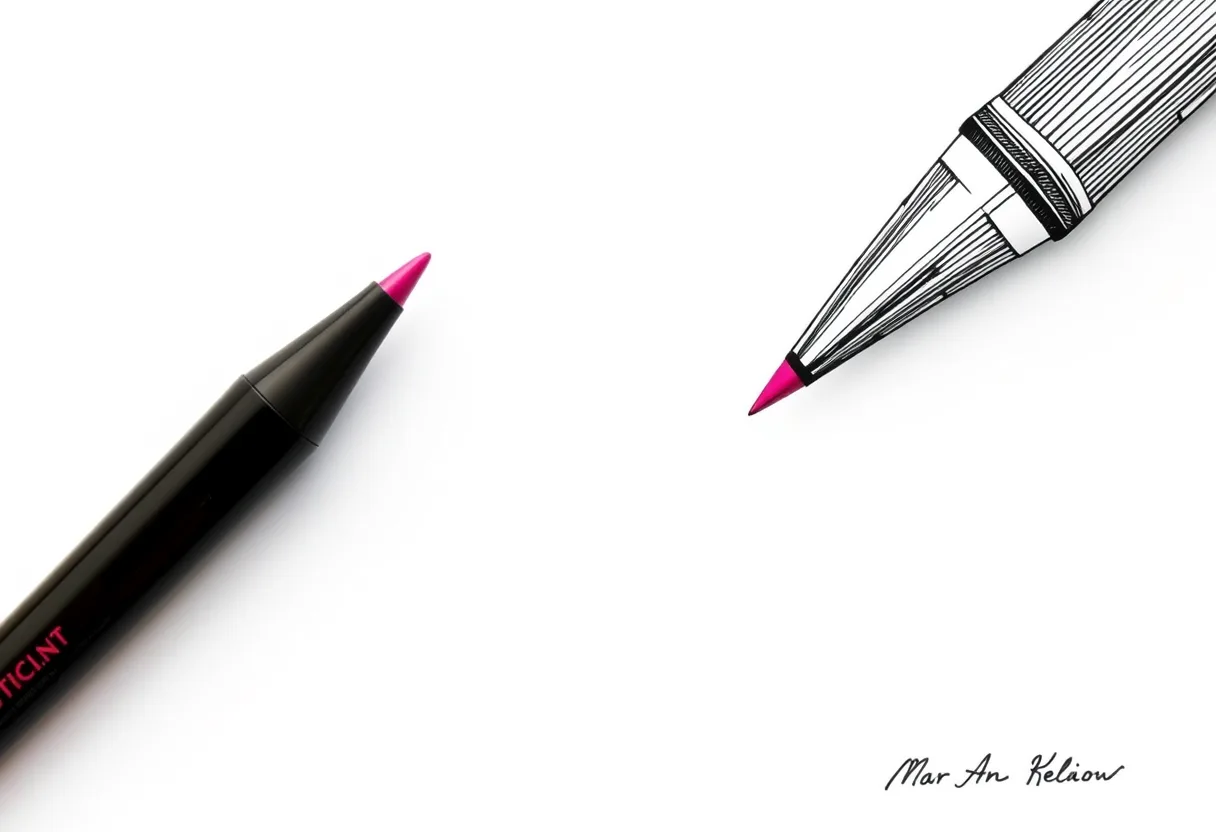
The pen is where your plot meets the paper, and the most common decision is fineliner vs gel pen. Both work beautifully in a plotter — but they excel at different things. Here’s how to choose.
Line consistency
Fineliners win. A Pigma Micron lays down the same line width from the first stroke to the thousandth, which is exactly what a plotter’s repetitive motion demands. Gel pens are slightly more variable, especially as ink flow fluctuates.
Color and saturation
Gel pens win. Gel ink is richer and more saturated, and it’s the only practical way to plot opaque light colors on dark paper. A Pentel EnerGel in color reads bolder than any fineliner. For vivid, photo-reproducible color, gel is the choice.
Fine detail
Fineliners win, narrowly. Pigment fineliners come in very fine nibs (down to 0.2 mm) with rigid tips for precise detail. That said, the Pilot G-Tec-C4 is a gel pen with a needle tip that rivals fineliners for thin, clean lines — a genuine crossover option.
Dry time and smearing
Fineliners win for fast workflows — pigment ink dries almost instantly. Gel inks take longer, which matters for multi-pass and color plots where the pen travels back over fresh ink. Fast-drying gels like EnerGel narrow this gap considerably.
Archival life
Fineliners win, decisively. Pigment fineliner ink is waterproof and fade-resistant for decades. Most gel inks are dye-based and fade under sunlight. For framed originals, use fineliners; for prints you’ll scan and reproduce, gel is fine.
Speed tolerance
Fineliners win. They keep up with fast plotting; gel pens need lower speeds to avoid skipping. If you plot fast and unattended, fineliners are less fussy.
Cost
Roughly even. Both are affordable; fineliners last longer on heavy hatching, while gel pens are cheap enough to use liberally.
The verdict
| Need | Pick |
|---|---|
| Consistent, archival line art | Fineliner |
| Fine detail and dense hatching | Fineliner |
| Bold, saturated color | Gel pen |
| Plotting on black/dark paper | Gel pen |
| Fast, unattended plotting | Fineliner |
| Glossy, wet-look strokes | Gel pen |
The honest answer: own both. Use fineliners as your everyday workhorse for clean, lasting line art, and reach for gel pens when you want color, opacity, or a bolder look. They’re complements, not competitors.
Frequently asked questions
Are fineliners or gel pens better for pen plotting?
Fineliners win for consistency, archival life, and fine detail; gel pens win for color saturation, opacity on dark paper, and a wetter, bolder look. Most plotter artists keep both and choose per project.
Do gel pens skip more than fineliners in a plotter?
They can, because gel ink is thicker and needs a moment to flow after fast moves. Lowering plot speed by 20–40% largely solves it. Fineliners are more forgiving at speed.
Which lasts longer, a fineliner or a gel pen?
Pigment fineliners are archival and fade-resistant for decades. Most gel inks are dye-based and fade under UV, so fineliners are the better choice for work you want to preserve or frame.
Gear mentioned in this post
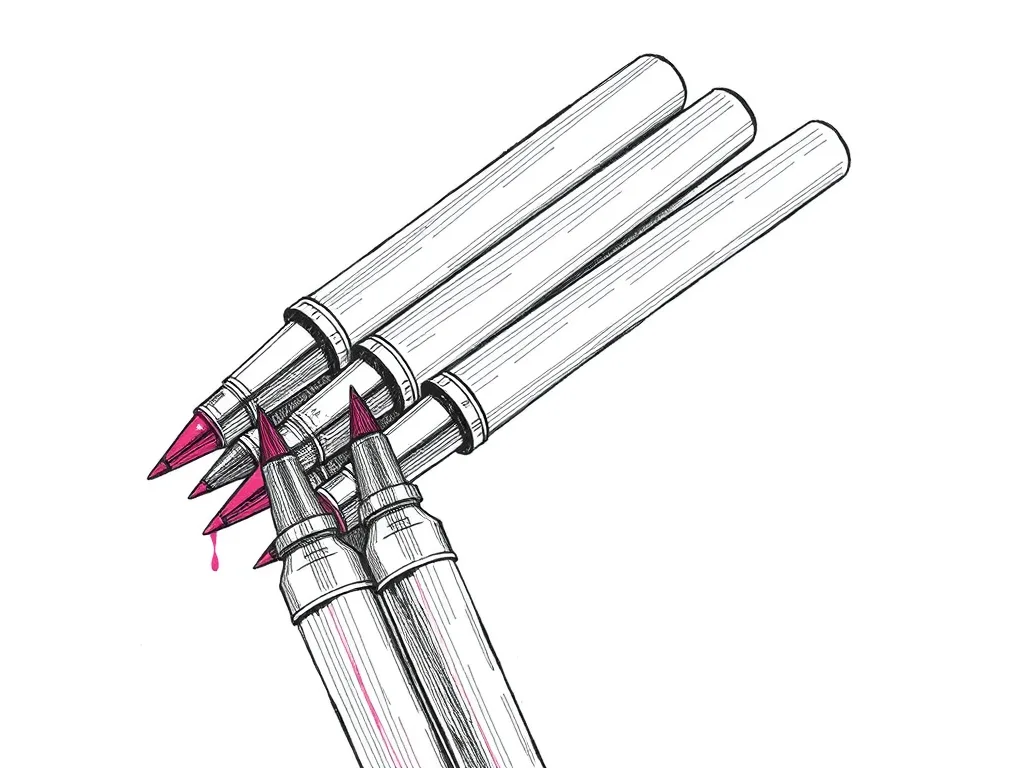
Sakura Pigma Micron Fineliner Set
4.8 (5,400)Archival pigment fineliners that are the de facto default for pen plotting — consistent line width, fade-proof ink and almost no skipping.
Best for: Clean, consistent line art on most papers
Pilot G-Tec-C4 Ultra-Fine Gel Pen
4.5 (1,640)A 0.4 mm gel pen with needle-like precision — produces line weights that approach technical pen territory at a fraction of the cost.
Best for: Ultra-fine detail work and dense hatching
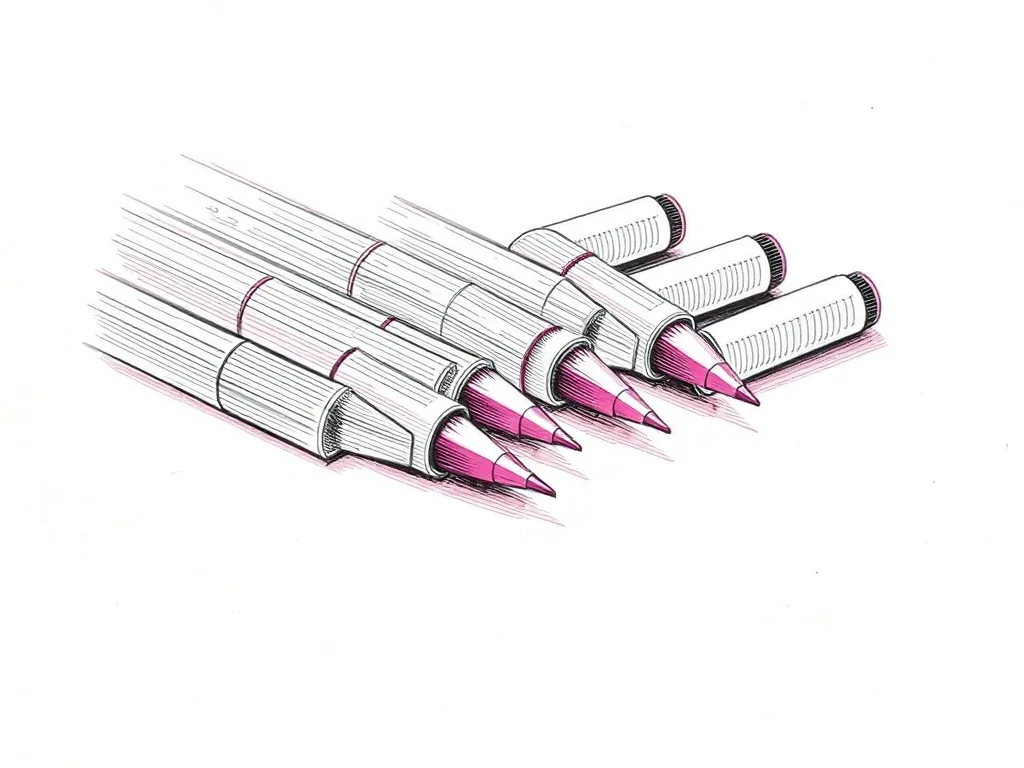
Pentel EnerGel Liquid Gel Pen Set
4.5 (3,100)Fast-drying liquid gel pens with vivid color saturation — a compelling way to add bold color to pen plotter art without waiting minutes between passes.
Best for: Bold color plots and multi-pass color work