Plotting with Fountain Pens: A Practical Guide
Fountain pens produce gorgeous, characterful lines on a plotter — if you set them up right. Here's how to plot with fountain pens without feathering, blobs or clogs.
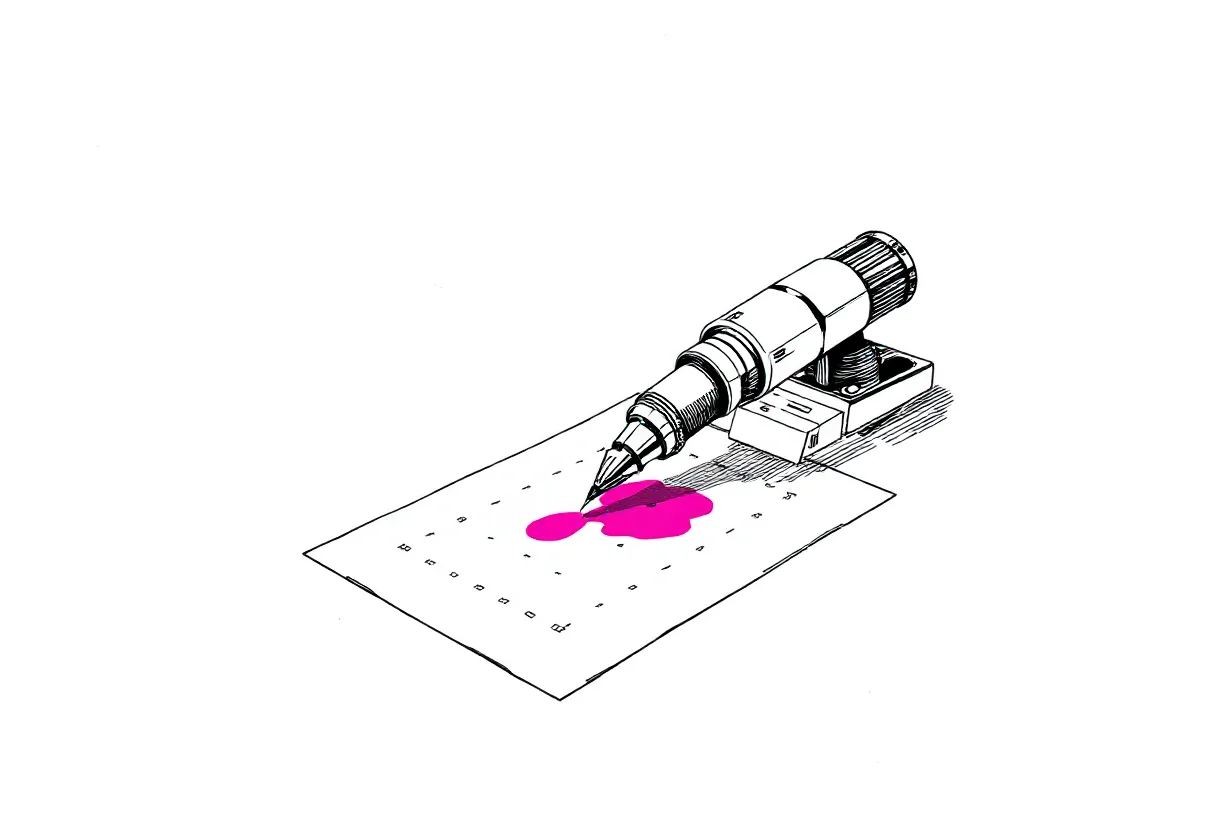
Fountain pens are the connoisseur’s choice for plotting. They give line variation, ink sheen, and an organic character that rigid fineliners simply can’t produce. They’re also fussier — but entirely manageable once you understand the three things that matter: clamp, paper, and speed. Here’s how to get a fountain pen plotter setup working.
You need the right clamp
Fountain pens are larger and heavier than fineliners, and their nibs must contact the paper at the correct angle. A plotter with a universal or adjustable pen mount — like the AxiDraw — handles them well. Tighter, fixed clamps designed only for slim fineliners may not grip a fountain pen securely or hold the right angle.
Mount the pen so the nib sits flat against the paper as it would in your hand, not tilted. The nib’s sweet spot needs proper contact to flow.
Paper makes or breaks it
This is where most fountain-pen plots fail. Fountain pen ink is water-based and wet, and absorbent paper wicks it sideways into feathered, fuzzy lines. The fix is paper that’s smooth and well sized (treated to resist absorption), ideally with some cotton content. Fabriano Accademia handles fountain pens far better than typical sketch paper.
Avoid: rough sketch paper, cheap cartridge stock, and anything that drinks ink. Test on a scrap before committing.
Slow down
Fountain pens flow at a human writing pace, not a machine’s sprint. Run them at a reduced speed — often 40–60% of your fineliner setting — so the nib has time to lay ink consistently and doesn’t skip on fast moves or blob when it slows into a corner.
Manage ink flow and lifts
- Pen lifts: keep the lift height modest. A high lift can cause the nib to “burp” a drop of ink when it sets back down. A gentle, low lift keeps starts clean.
- Wetness: choose a drier ink if you see pooling. Some inks are far wetter than others.
- Long plots: fountain pens can run dry mid-plot. For long pieces, start with a full converter or cartridge and consider pausing to check.
Why bother?
Because the result is unlike anything else. A fountain pen on a plotter gives you subtle width variation as the machine changes direction, ink pooling at line ends that reads as intentional weight, and on the right paper, a sheen and depth that flat pigment ink never achieves. It takes more dialing-in than a Micron — but for a special piece, the character is worth it.
Frequently asked questions
Can you use a fountain pen in a pen plotter?
Yes, and the results can be beautiful — fountain pens give line variation and ink character no fineliner matches. You need a plotter with a universal or adjustable clamp (like the AxiDraw), the right paper, and slower speeds to manage ink flow.
Why does my fountain pen feather or bleed when plotting?
The paper is too absorbent for the ink. Use a smooth, sized, cotton-content paper that resists feathering, and choose a less wet ink. Coated or fountain-pen-friendly stock fixes most feathering.
What paper is best for fountain pen plotting?
Smooth, well-sized paper with some cotton content — it holds water-based ink without spreading. Avoid rough or highly absorbent sketch paper, which causes fuzzy lines.
Gear mentioned in this post

Fabriano Accademia Drawing Pad A3
4.7 (890)A fine-tooth cotton-blend cartridge paper with just enough surface texture to grip ink beautifully — the European alternative to Bristol for plotters who want character over clinical smoothness.
Best for: Plotters wanting texture and character in their output