Pigma Micron vs Staedtler Pigment Liner: Which Fineliner for Plotting?
The two most recommended fineliners for pen plotters — tested head to head on line consistency, tip durability, ink lightfastness, and plotter compatibility.
If you’ve asked “which fineliner should I use for my plotter?” in any community, you’ve received one of two answers: Sakura Pigma Micron or Staedtler Pigment Liner 308. Both are genuinely good. Neither is perfect for every situation. Here’s how they actually compare on the metrics that matter in a plotter — not in your hand.
Ink: pigment quality and lightfastness
Both pens use pigment-based inks that are waterproof and fade-resistant once dry. On any practical comparison they’re equivalent — both are rated lightfast and suitable for framing and archival use.
One difference: Pigma Micron uses Sakura’s proprietary “Pigma” pigment formulation, which has an exceptionally long track record in archival contexts (illustration, manga, technical drawing). The Staedtler 308 uses a similar but slightly different pigment; both are rated to resist fading for decades.
For plotting purposes, treat them as equivalent on ink quality. Neither will yellow, fade, or bleed through the paper.
Tip construction and durability
This is where they diverge.
Pigma Micron: plastic nib with a fine fibre core. The tip is slightly flexible — forgiving if pen-down height is a touch high. It handles speed variations and direction changes smoothly. The downside: under sustained sideways force from a pen holder clamp, the barrel can flex slightly and the nib tip can wear asymmetrically over long plots.
Staedtler 308: slightly thicker barrel with a metal cap ring at the writing end that reinforces the grip point. This makes the pen more resistant to the sideways clamping force that pen holders apply, particularly on plotters with tighter metal clamps. The result is more consistent barrel alignment and less tip deformation over long, dense plots.
For casual plotting, the Micron’s tip flexibility is an advantage — more forgiving of setup imprecision. For dense, hour-long plots with many direction changes, the Staedtler’s sturdier construction shows its value.
Line width consistency
Both pens hold their rated line width well in a plotter. At matching sizes (0.3, 0.5, 0.8 mm), the line widths are comparable — close enough that swapping mid-project is safe if you run out of one brand.
The Micron tends to deliver a slightly softer line with a touch more ink flow; the Staedtler is a touch drier and more precise-feeling on smooth paper. Neither is wrong — it’s a preference.
Available sizes
Pigma Micron: 005 (0.20), 01 (0.25), 02 (0.30), 03 (0.35), 05 (0.45), 08 (0.50), 1 (0.65) — a wider range, especially at the fine end.
Staedtler 308: 0.1, 0.2, 0.3, 0.4, 0.5, 0.6, 0.7, 0.8, 1.0 mm — evenly spaced, easier to select by target width.
If you need very fine sizes (0.2 mm or 0.25 mm), the Micron gives you more options at that end. For a broad range of working widths, the Staedtler’s even stepping is useful.
Barrel size and mount compatibility
Both pens fit standard plotter pen holders with an inner diameter of approximately 9–10 mm. The Staedtler’s slightly thicker barrel provides a more positive grip in some mounts. If you have a spring-loaded holder that sometimes slips, the Staedtler’s larger diameter can help.
Price and availability
Both are priced similarly — roughly $3–5 per pen individually, with sets available for better value. The Pigma Micron is available at more art supply retailers worldwide; the Staedtler 308 is common in Europe and at most major art chains globally.
Which should you buy?
Start with the Pigma Micron if: you’re new to plotting, you want the most forgiving and widely documented pen, or you need fine sizes below 0.3 mm.
Reach for the Staedtler 308 if: you run long, dense plots, you have a metal clamp holder that puts sideways stress on the barrel, or you find the Micron tip wears asymmetrically in your setup.
In practice, most dedicated plotters stock both. The Pigma Micron set for everyday work; the Staedtler 308 as the backup for marathon plots. They’re not competing — they’re complementary.
Frequently asked questions
Which is better for pen plotters — Pigma Micron or Staedtler?
For most plotters, the Pigma Micron is the better default: it's available in more sizes, has a slightly more forgiving tip, and the pigment ink is genuinely archival. The Staedtler 308 is the better choice for dense, long-running plots where barrel rigidity matters — its metal-clad cap ring makes it more resistant to the sideways force of a pen holder clamp.
Do fineliners wear out faster in a plotter than in hand use?
Yes, significantly. A plotter applies constant pressure at a fixed angle, sometimes for hours. Tip wear is accelerated compared to intermittent hand drawing. Smooth paper (bristol, Rhodia) is much gentler on nibs than rough or textured paper.
What nib size should I start with?
0.5 mm is the most versatile starting point — visible at normal viewing distance, forgiving on a range of papers, and the most available size in both brands. Add a 0.3 mm for detail and a 0.7 or 0.8 mm for bold strokes once you know your workflow.
Gear mentioned in this post
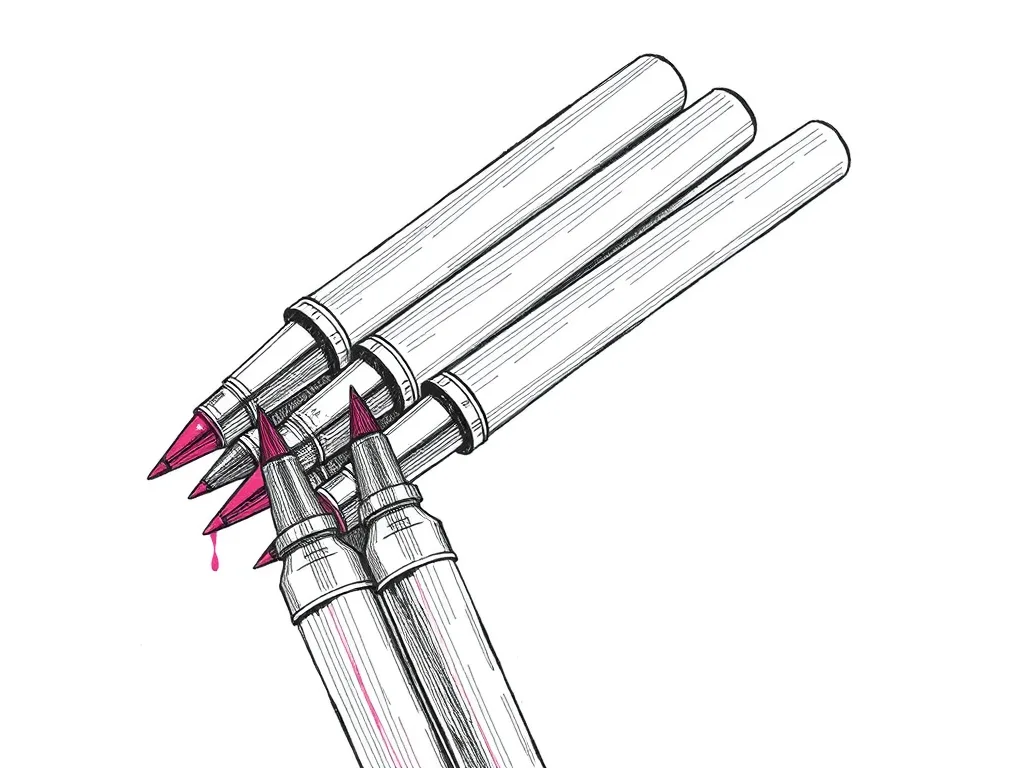
Sakura Pigma Micron Fineliner Set
4.8 (5,400)Archival pigment fineliners that are the de facto default for pen plotting — consistent line width, fade-proof ink and almost no skipping.
Best for: Clean, consistent line art on most papers
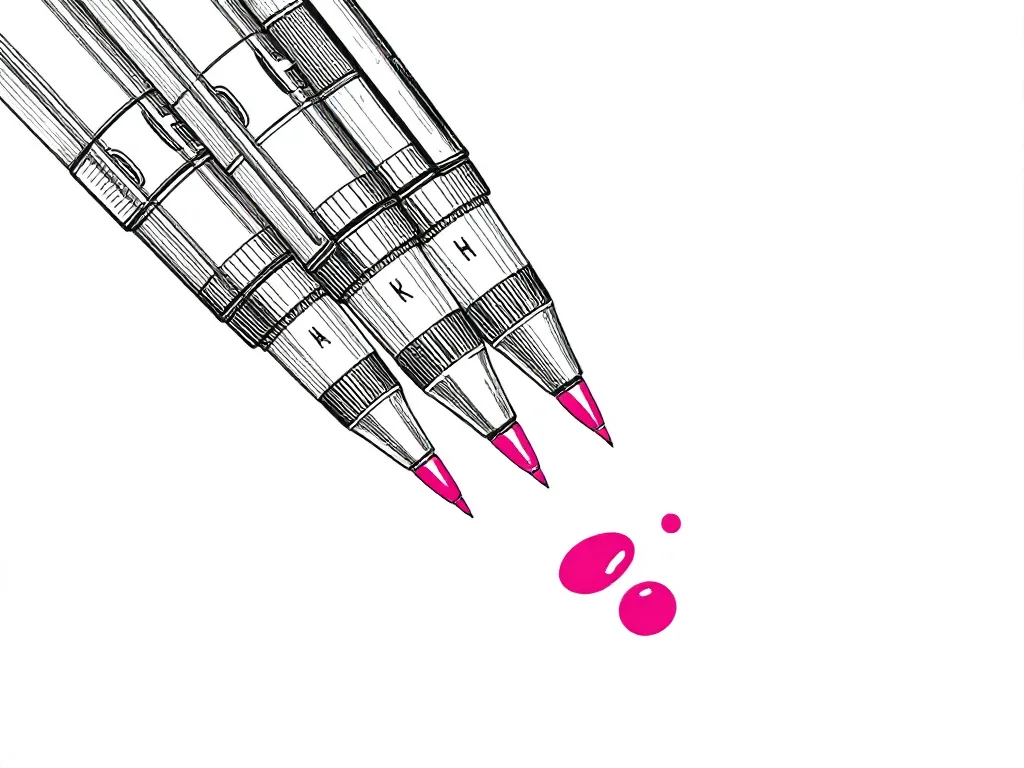
Staedtler Pigment Liner 308 Set
4.6 (3,800)The technical-pen answer to Microns — metal-clad tips that survive heavy plotting, pigment ink that stays put, and a line width that barely drifts.
Best for: Long, tip-punishing plots on smooth paper
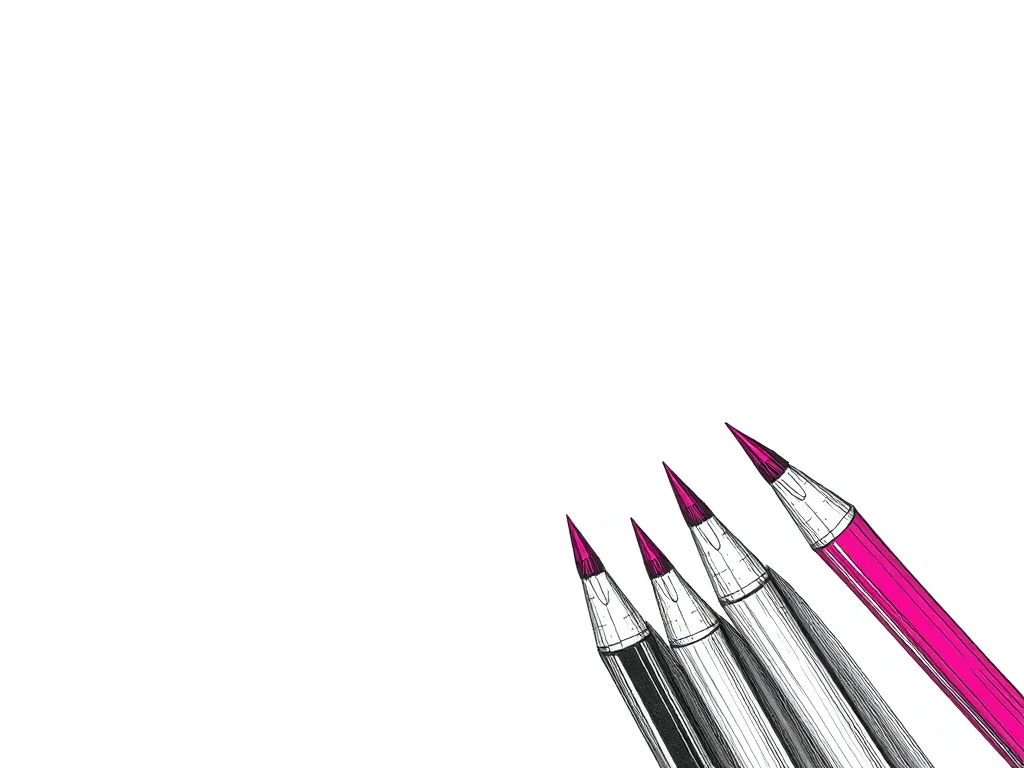
Uni-ball Pin Fine Line Drawing Pen Set
4.5 (6,200)A budget-friendly multi-size pigment fineliner set that holds its own against pricier pens — waterproof, consistent, and forgiving under a plotter.
Best for: Affordable multi-width line work

Hahnemühle Bristol Board Pad
4.8 (410)A heavyweight, ultra-smooth German bristol that takes fineliner ink with glass-like crispness — a premium surface for finished, frame-worthy plots.
Best for: Premium finished plots and fine detail